
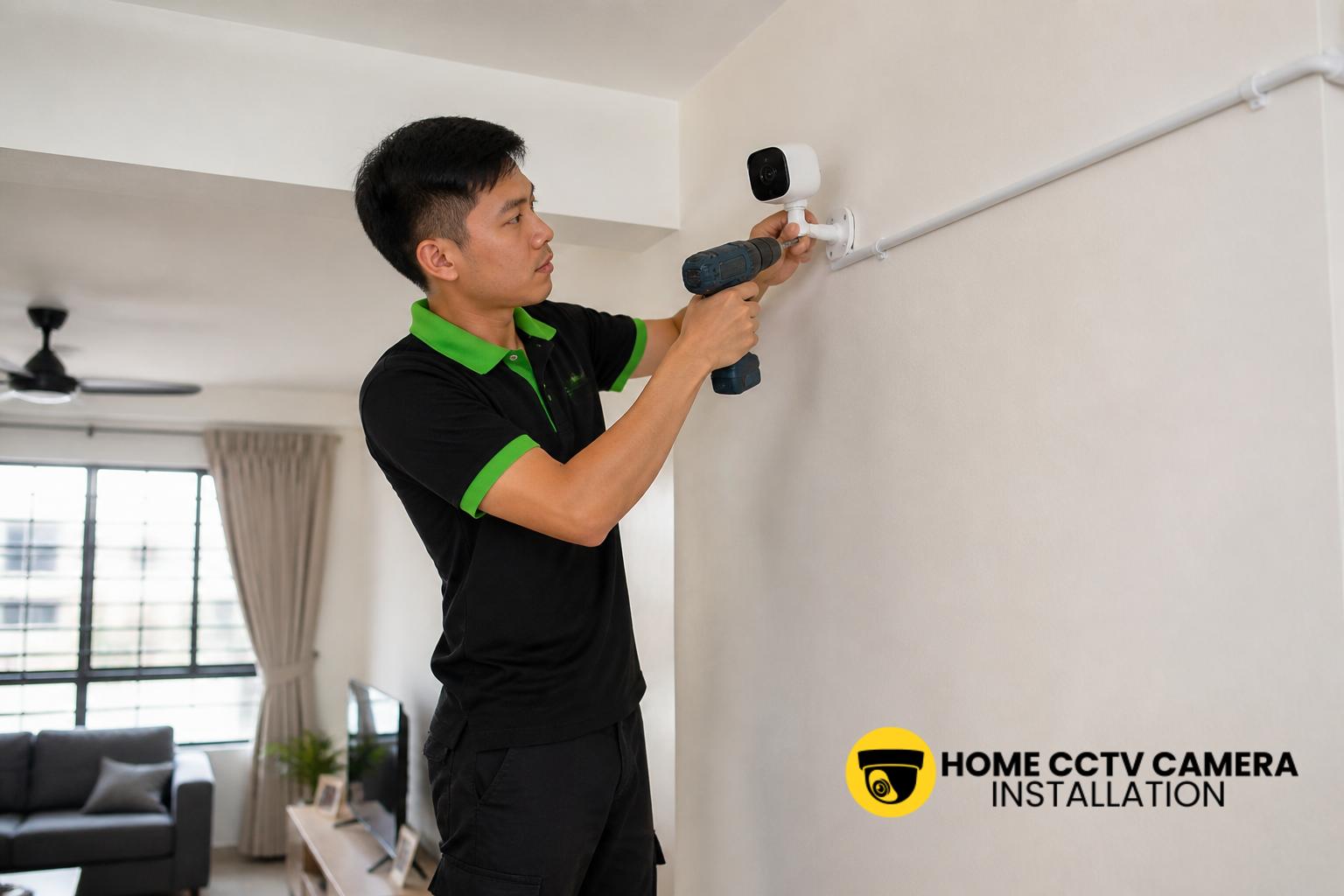
Deciding where to place security cameras in a Singapore home is not just about mounting a device at the front gate. Good camera placement depends on the layout of the property, the likely entry points, the areas you want to monitor, and practical issues such as power supply, cabling and weather exposure. In HDB flats, condominiums and landed homes, the best locations are usually the ones that give useful coverage without creating blind spots or unnecessary intrusion.
Start with the main entry points
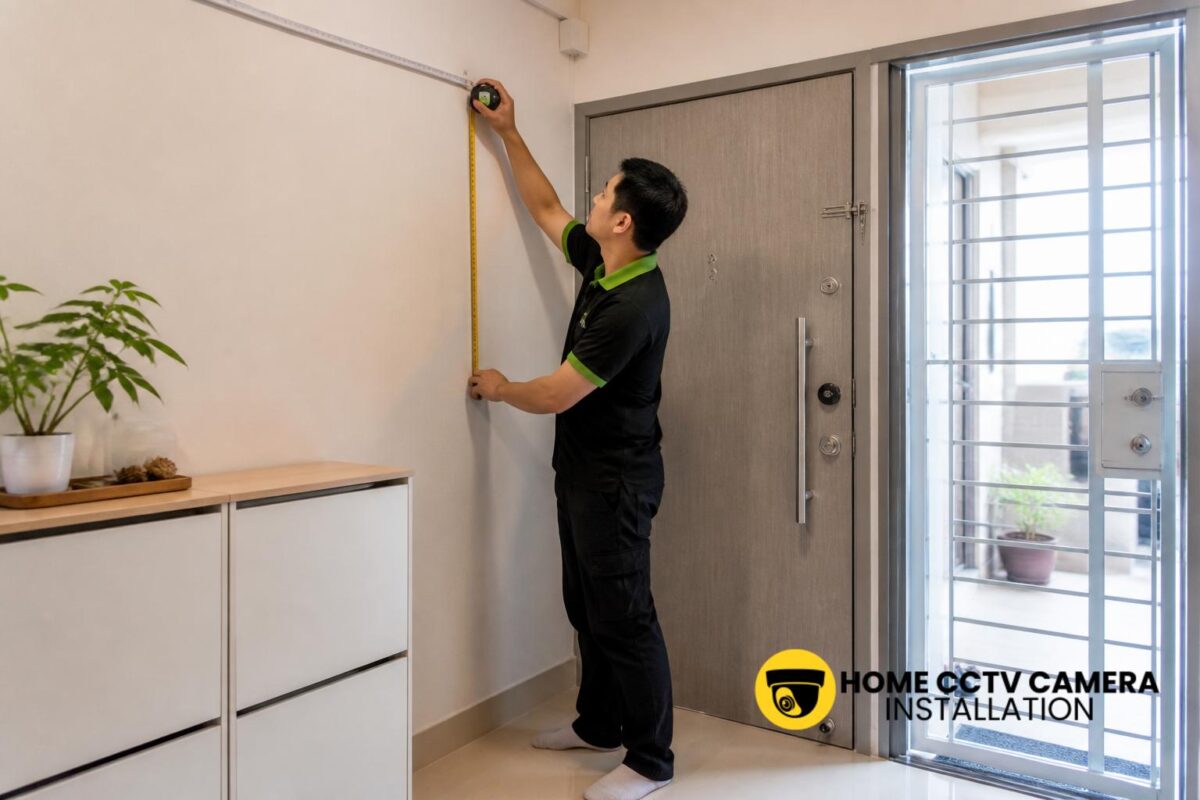
The front door is often the first place homeowners consider, and for good reason. It is the main access point for family members, visitors, delivery personnel and, in some cases, unfamiliar individuals. A camera placed to capture the door area can help you see who approached, whether a parcel was left outside, and what happened before and after the door was opened.
For landed homes, the gate, porch and driveway are also important. These areas may provide earlier visibility of visitors before they reach the main door. In condominiums and HDB flats, the corridor outside the unit entrance is usually the most relevant approach area, subject to building rules and the practical limits of the installation point.
Cover the areas where movement is most likely
Security cameras are most useful when they monitor predictable movement rather than empty corners. Think about where people naturally pass through, such as entrances, side passages, stair landings, service yards and garden paths. These are often better choices than placing cameras in rooms that see little action.
In a landed property, side gates, back doors and access routes to the kitchen or utility area can be worth covering. In a flat, the foyer, household shelter access or the space near the main entrance may be more relevant than interior rooms, depending on what you are trying to observe. The goal is to capture a clear view of movement while avoiding wasted coverage.
Choose camera angles that reduce blind spots
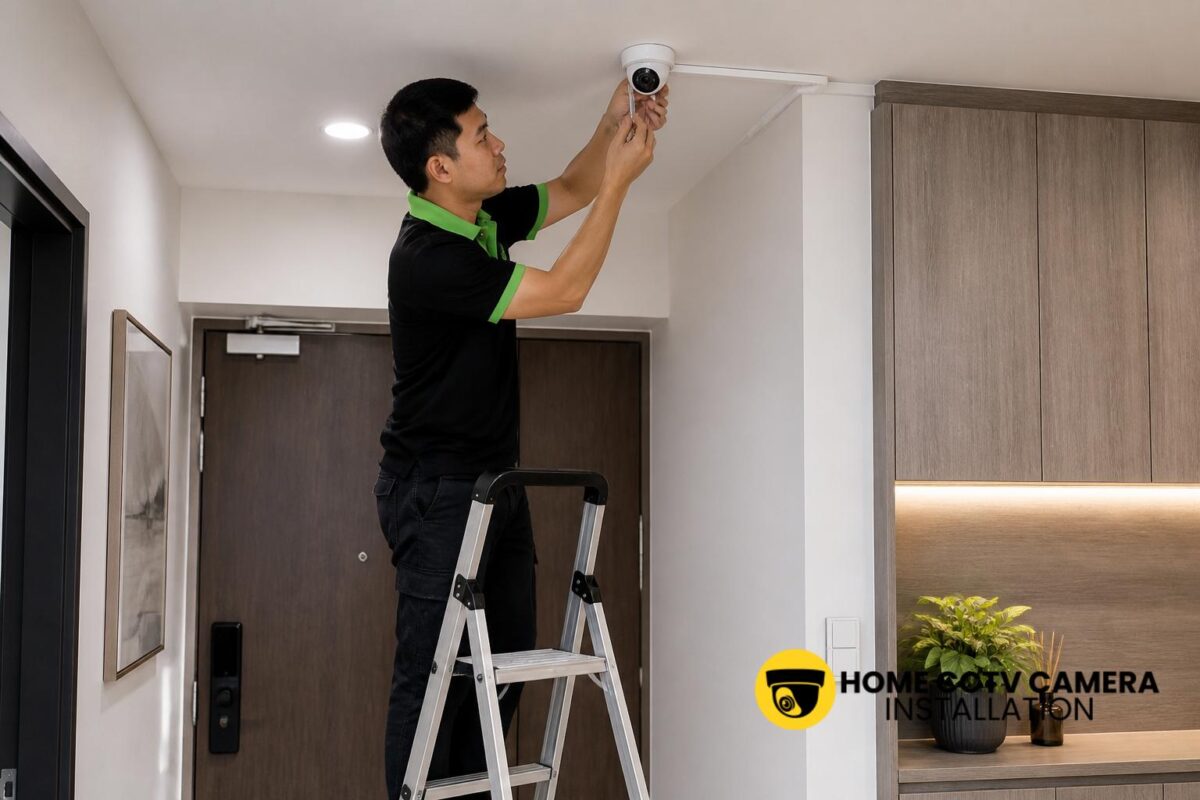
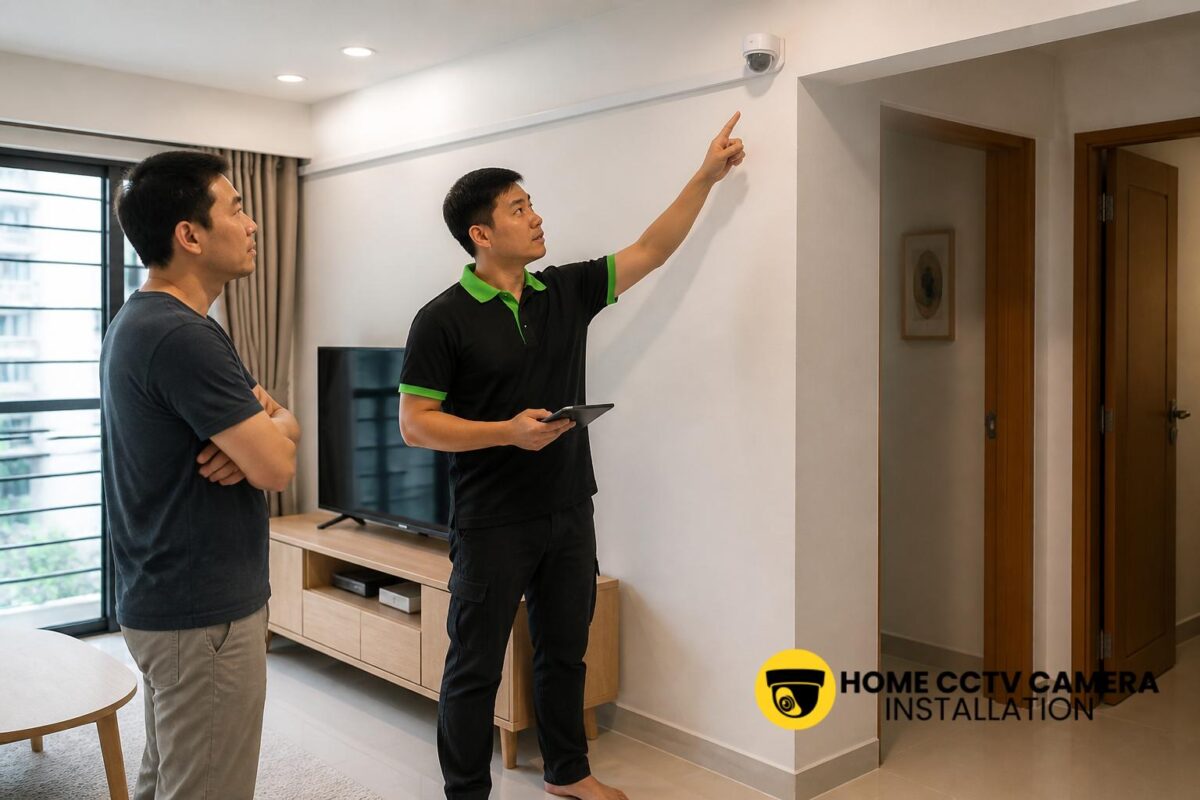
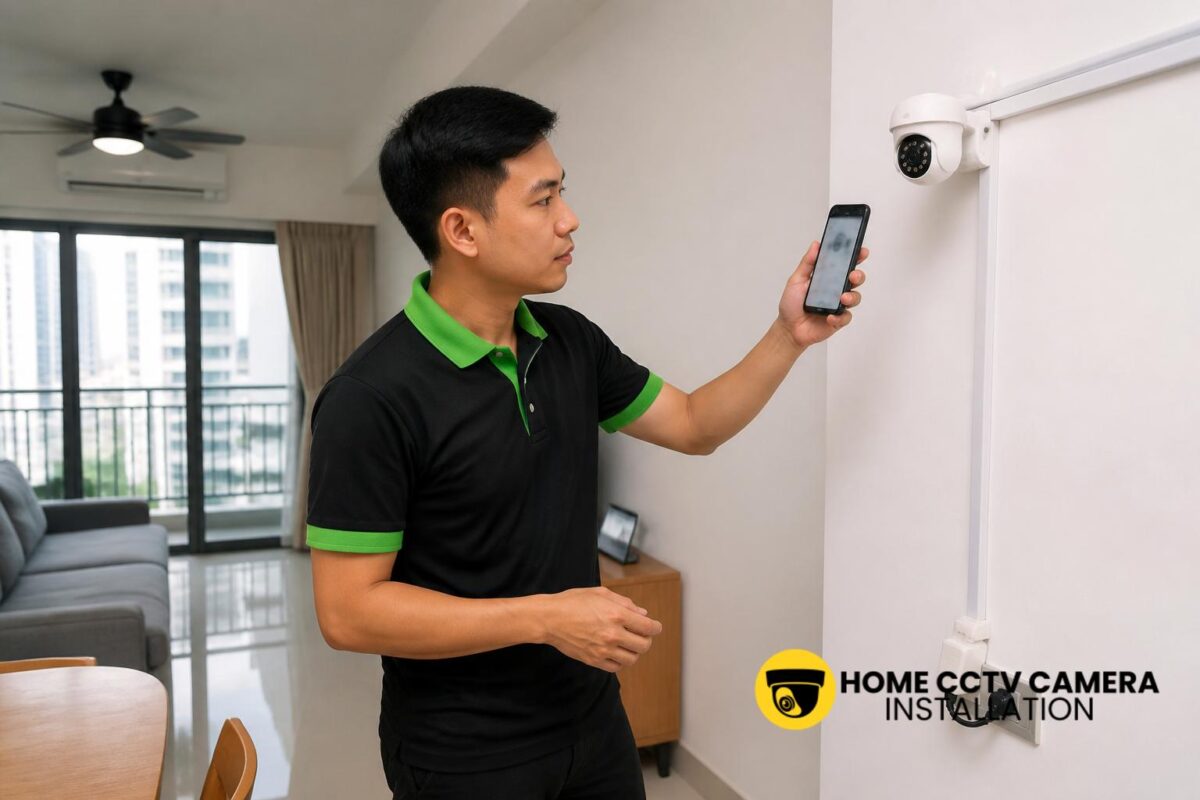
Camera position matters as much as camera location. A camera pointed too high may show only the tops of heads, while one pointed too low may miss broader context. The usual aim is to place the camera high enough to be difficult to tamper with, but angled so that faces, actions and entry activity remain visible.
It is also sensible to avoid placing a camera directly behind strong reflections, bright lights or fixed obstructions such as beams and plant racks. Even a well-installed IP security camera can underperform if its view is blocked by poor positioning. A proper site plan should identify blind spots and confirm how each camera complements the others.
Think about HDB, condominium and landed-home layouts differently
In HDB flats, the best placement is usually focused on the unit entrance and any internal area that needs monitoring near access points. Installations must also respect common-area and building considerations, so placement should be planned carefully and kept neat. Corridor-facing units often benefit from a compact camera position that captures activity at the doorway without creating unnecessary clutter.
In condominiums, you may need to work around shared walkway layouts, ceiling points and management rules. Landed homes offer more flexibility, but they also tend to have more access points, such as side entrances, gates, porches and backyard paths. A larger property usually needs a wider placement plan rather than a single camera placed in one obvious spot.
Use outdoor-rated cameras where the environment is exposed
Any camera installed outdoors should be suitable for Singapore’s weather conditions, including heat, humidity and heavy rain. Porch areas, gates, exterior walls and garden-facing positions are exposed to the elements, so the mounting point and camera housing must be selected accordingly.
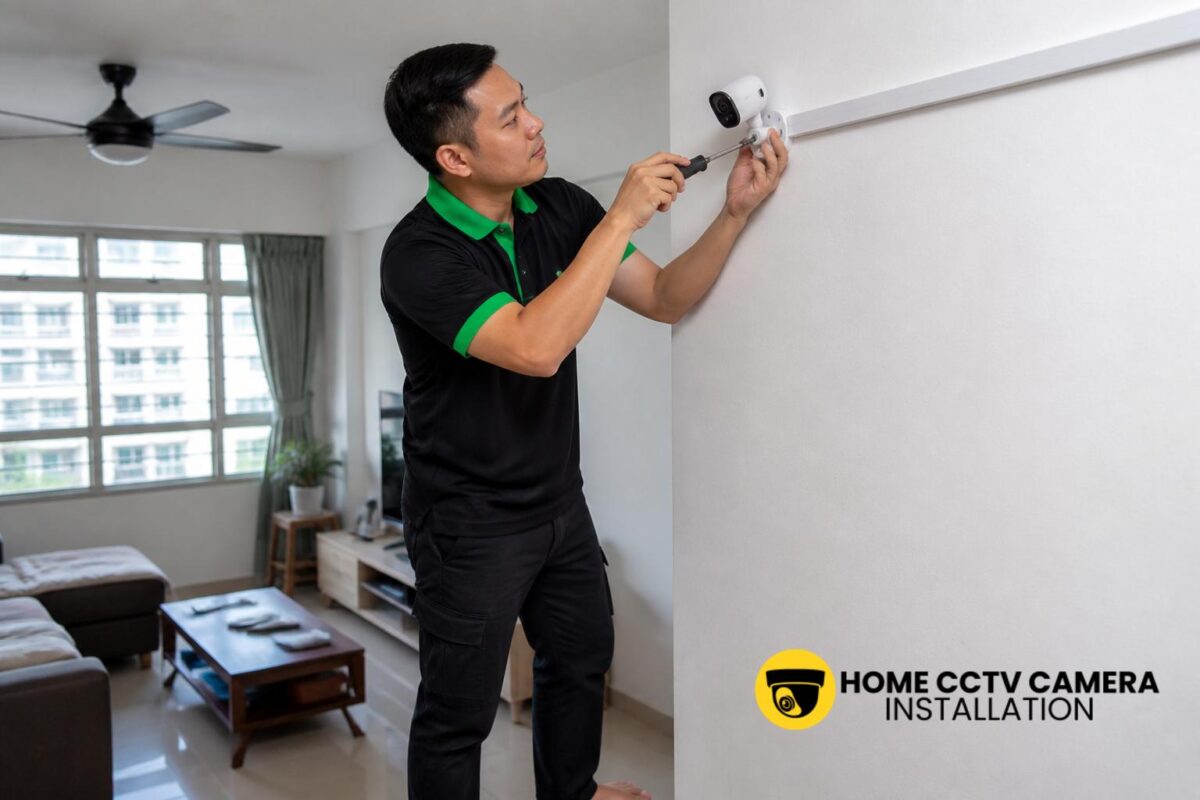
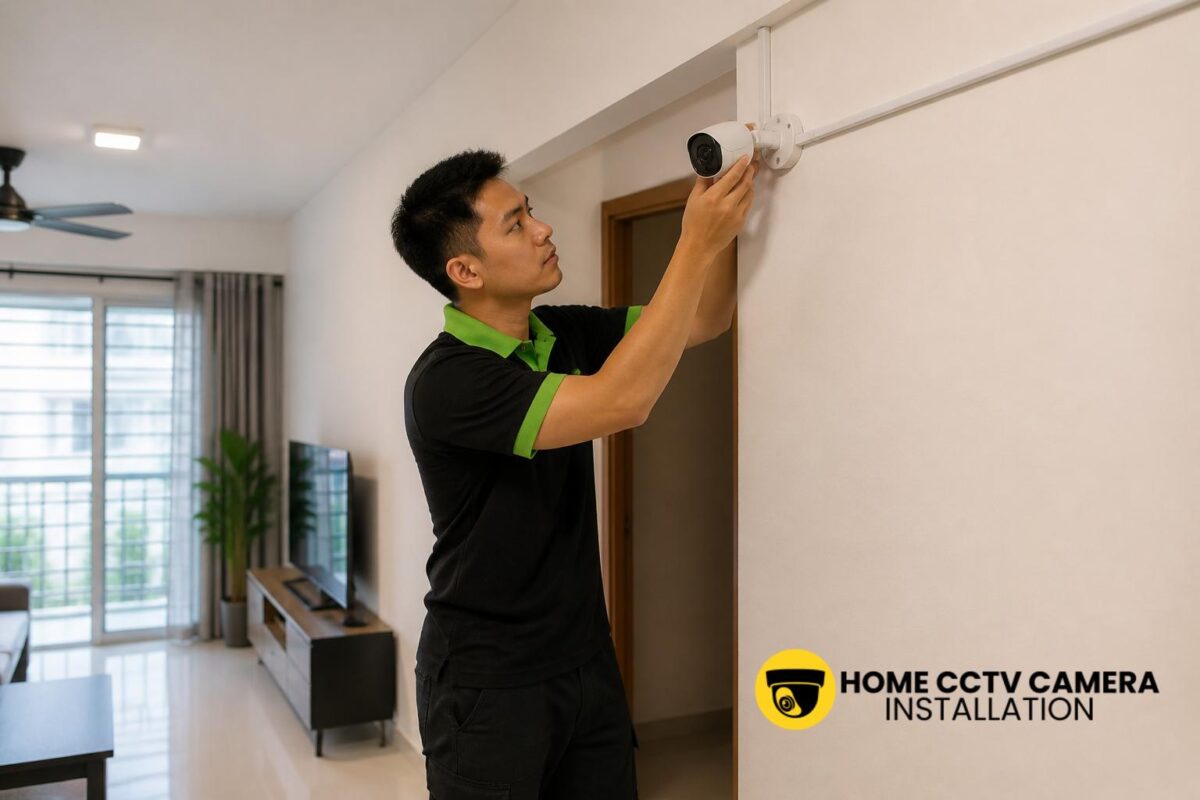
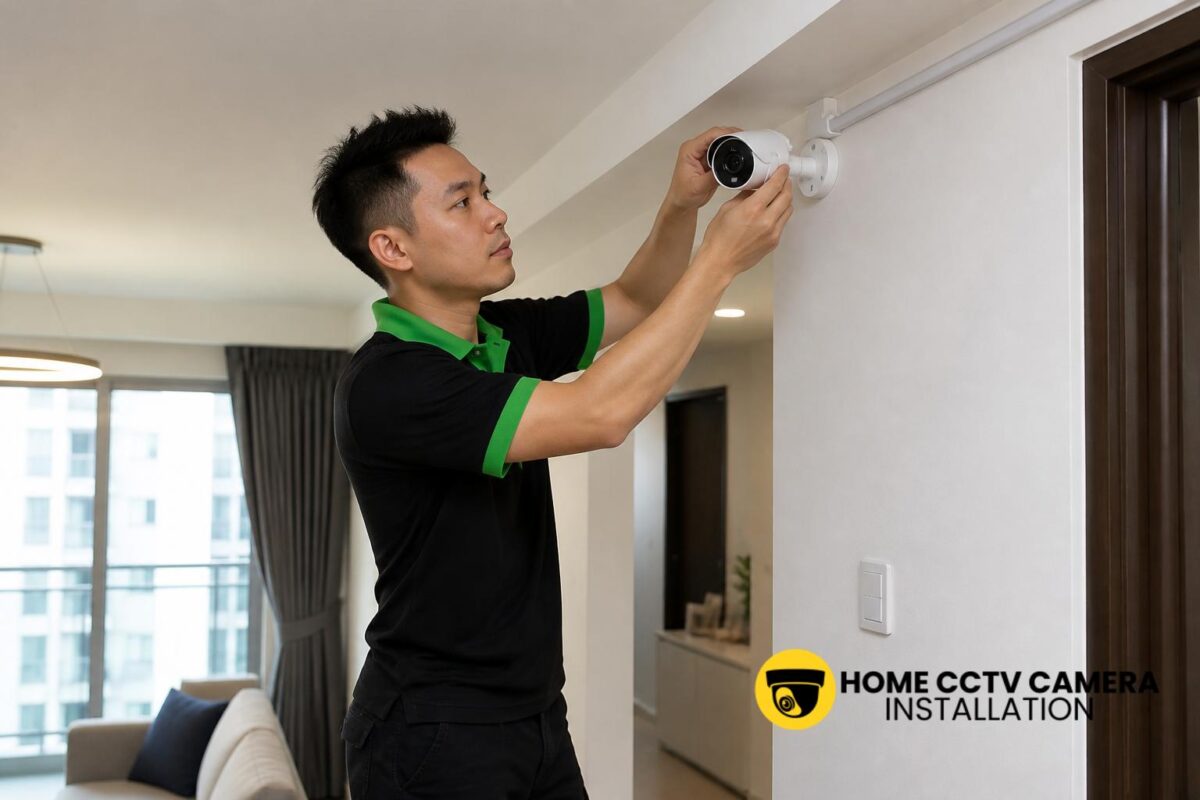
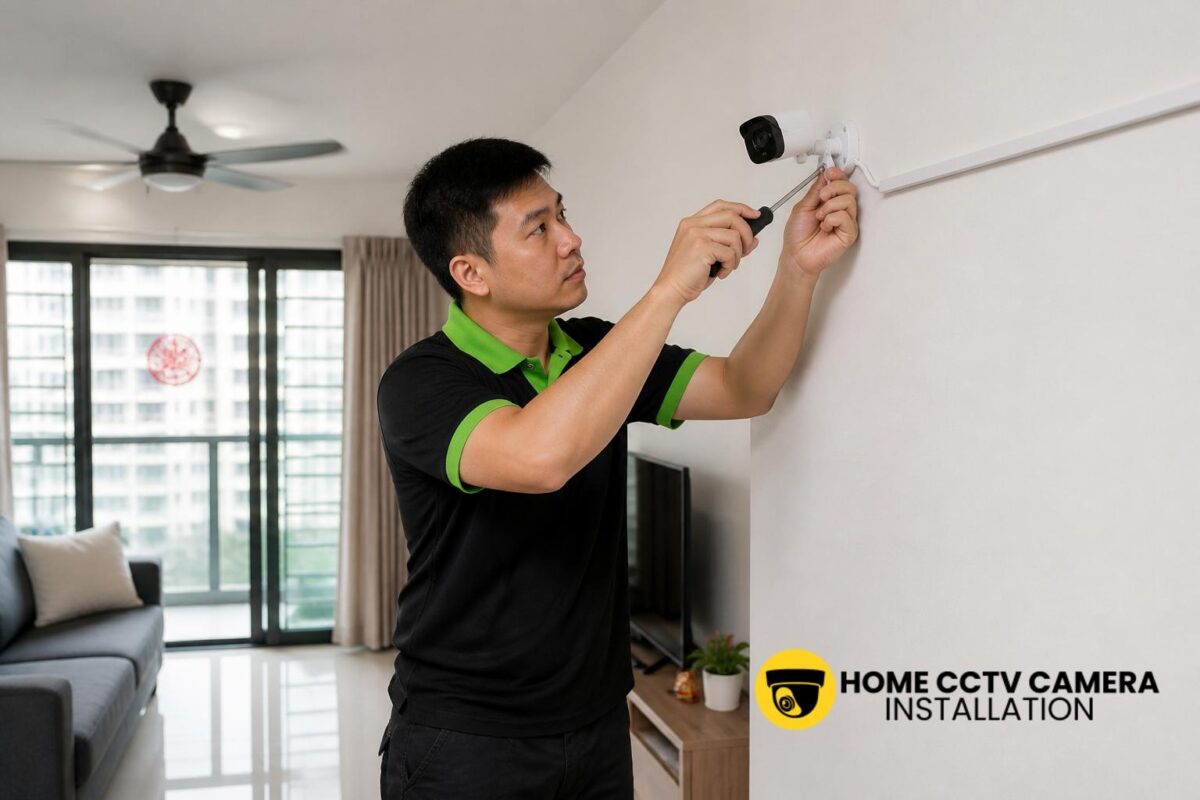
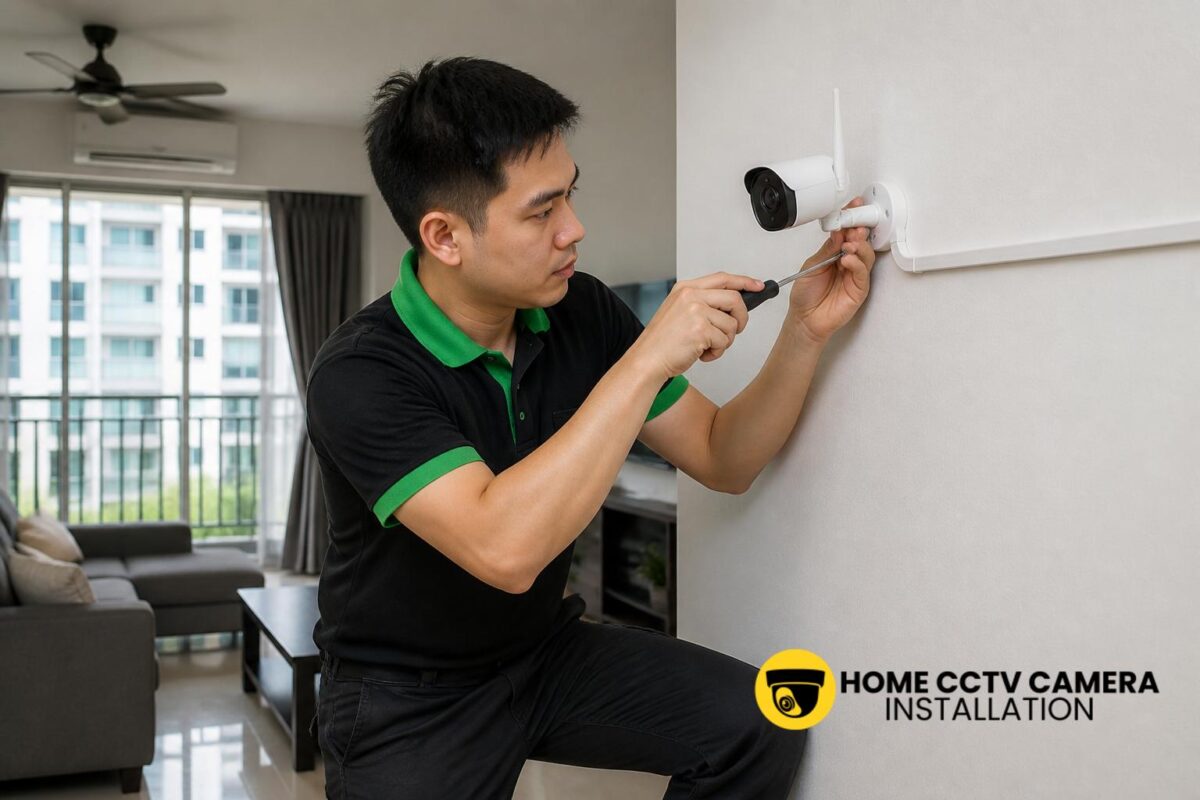
Even when a camera is under some shelter, moisture and temperature changes can still affect long-term performance. For this reason, secure wall or ceiling mounting, proper sealing where needed, and tidy cable routing are all part of a reliable home CCTV installation. A camera that is physically well placed is more likely to remain usable over time than one mounted only for convenience.
Plan for power points and cable routing before installation
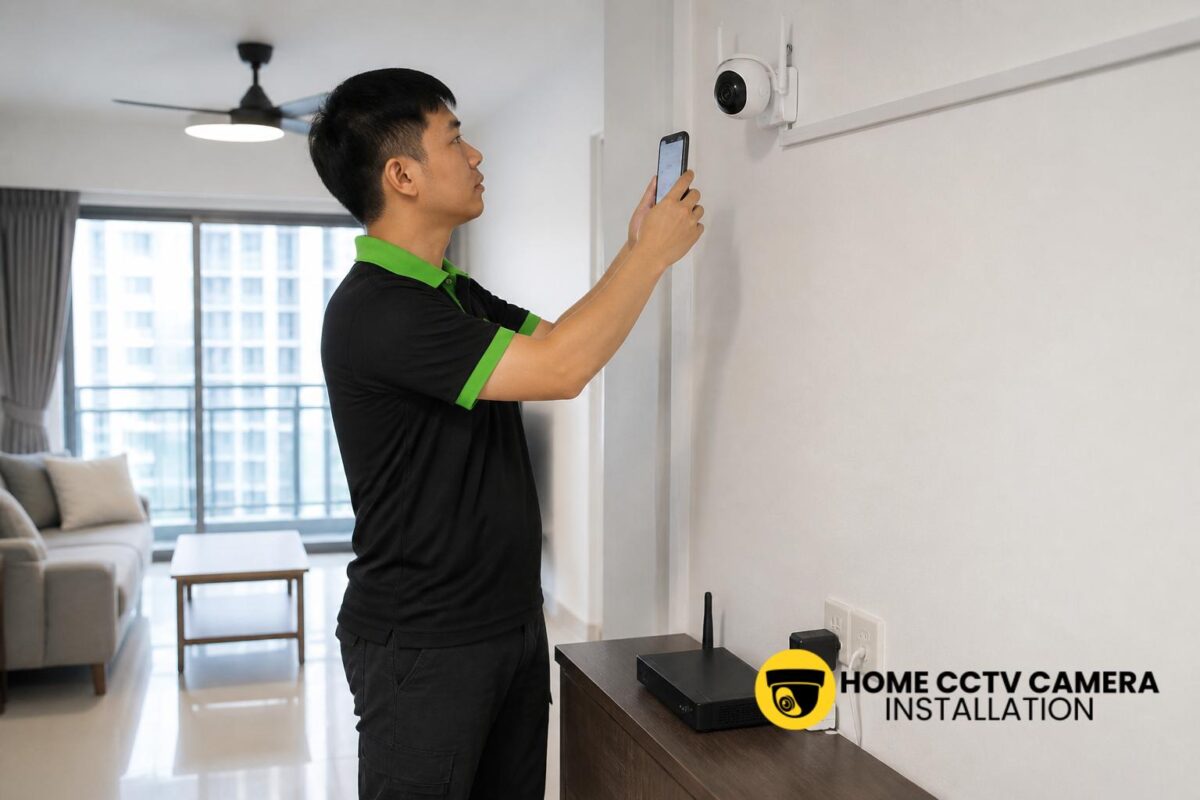
Many camera placement problems are really power and cabling problems. A good location on paper may not be practical if there is no suitable power point nearby or if the cable run would look messy. For wired CCTV systems, this is especially important because the installation must balance coverage, reliability and appearance.
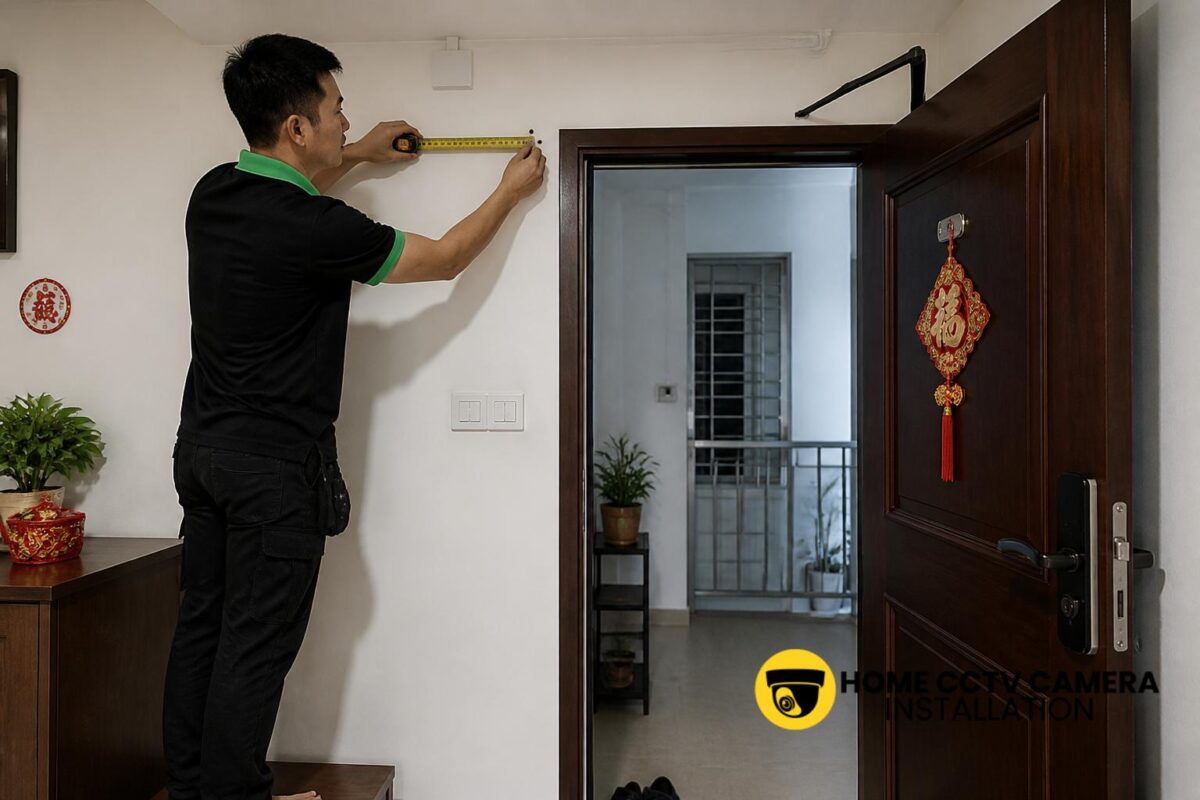
During planning, it helps to identify where the power source will come from, how the cable will be routed, and whether any basic support is needed to keep the installation neat. In some homes, the ideal camera spot is adjusted slightly so that the final result is safer, cleaner and easier to maintain. This is one reason professional placement planning is often valuable before drilling begins.
Decide what each camera is meant to capture
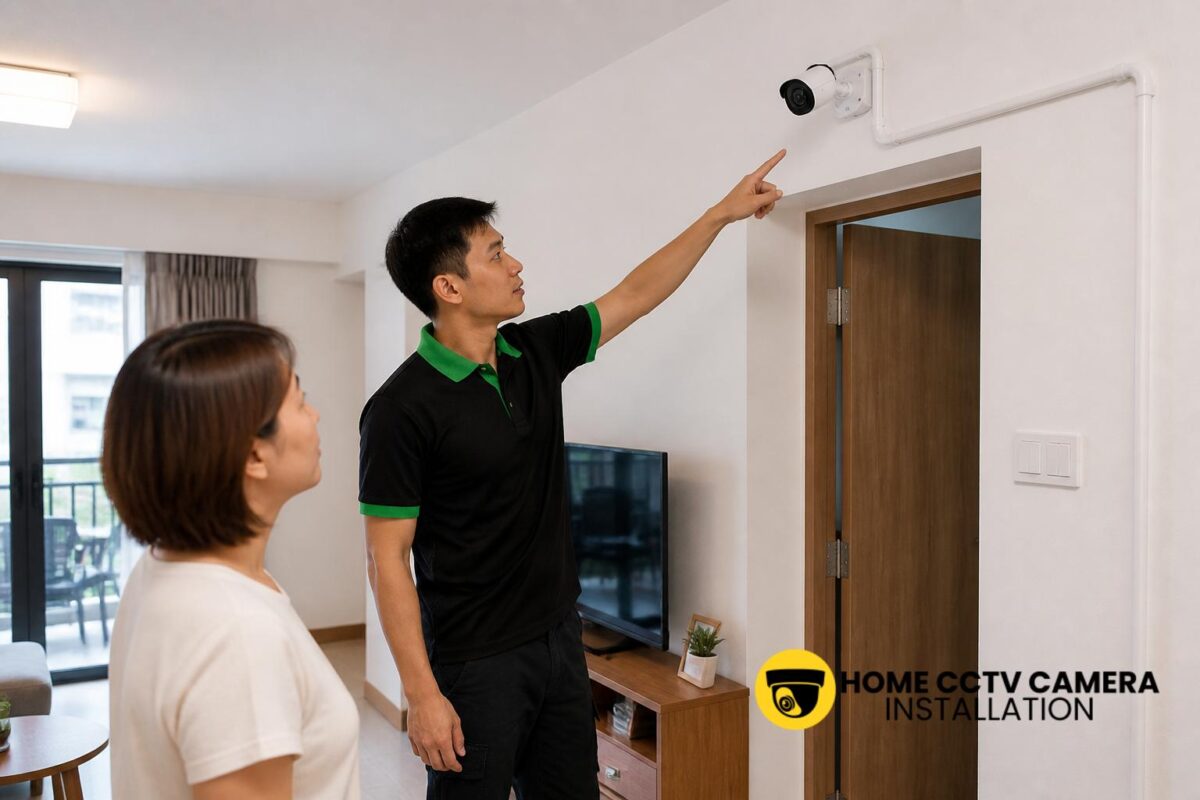
Before choosing locations, it is useful to define the purpose of each camera. One camera may be intended for the main door, another for the porch, and a third for the backyard or side passage. Clear purpose leads to better placement and a more efficient system overall.
If you are using customer-supplied cameras, the same planning still applies. Installation-only support can work well when the devices are already chosen, but the installer still needs to assess mounting height, viewing angle, cable path and power access. In other words, the camera brand matters less than whether the final placement matches the monitoring goal.
Avoid placing cameras where they are easily blocked
It is tempting to install a camera at the nearest convenient point, but convenience alone can lead to poor results. A camera may be blocked by a door frame, decorative feature, balcony rail, curtain, plant, car, or even the opening angle of a gate. These small details can reduce the usefulness of the footage.
It is also wise to avoid positions that are too exposed to tampering. A camera mounted too low is easier to reach, while one placed without checking the surrounding structure may be vulnerable to accidental knocks. Secure mounting on an appropriate wall or ceiling point helps the camera remain stable and perform consistently.
Match placement to everyday family routines
Security cameras should support the way a household actually lives. If children, elderly family members, domestic helpers or frequent visitors use a particular entrance, the camera should be positioned so that the activity there is captured clearly. The best setup is one that provides useful awareness without becoming intrusive in everyday living spaces.
For many Singapore homes, that means keeping the focus on external or transitional zones rather than private interiors. Hallways, entrances and access routes often provide enough coverage for practical monitoring. This approach keeps the system focused on movement and entry points, which is usually what homeowners want most.
If you would like help planning the right camera locations for your property, WhatsApp Home CCTV Camera Installation Singapore to discuss your home layout, number of cameras, supply-and-install or installation-only scope, preferred camera positions, cabling or power-point requirements and preferred schedule, then request a quotation: message us here.
Conclusion
The best places to install security cameras in Singapore homes are usually the main entry points, movement routes and exposed access areas that matter most to the household. Whether the property is an HDB flat, condominium or landed home, effective placement depends on clear purpose, practical mounting, suitable power access and a neat cable route. When these factors are planned properly, the system is far more likely to provide coverage that is both useful and sensible.
Choose Home CCTV Camera Installation Singapore
Home CCTV Camera Installation Singapore provides professional CCTV installation Singapore services for residential properties, supporting homeowners with reliable home CCTV and CCTV system Singapore solutions. Our services cover both home CCTV installation and installation only support for homeowners who already own a CCTV camera, IP camera, or security camera setup.
We work with various CCTV systems, including IP cameras, IP security cameras, surveillance cameras, and other configurations. Our installation services include camera mounting, basic cabling, and power point installation where required to ensure each CCTV camera is installed safely and positioned for effective coverage. From layout planning to final setup, we focus on practical CCTV installation that suits everyday home environments.
Serving households islandwide, Home CCTV Camera Installation Singapore delivers trusted solutions with a strong emphasis on workmanship, system reliability, and long-term usability. WhatsApp +65 8241 0032 for enquiries on our home CCTV installation services.
Frequently Asked Questions
Should a home security camera always face the front door?
Not always, but the front door is one of the most common and useful locations because it captures visitors and access activity. Depending on the home layout, other areas such as a gate, porch, side entrance or back door may also need coverage.
Is it better to install one camera or several cameras?
That depends on the property size and what you want to monitor. A smaller flat may only need one or two well-placed cameras, while a landed home often benefits from multiple cameras covering different access points and outdoor routes.
Can customer-supplied cameras be installed at the best locations?
Yes, provided the devices are suitable for the property and the installer can mount them safely with proper cable and power planning. Installation-only support still requires careful assessment of placement, angle and routing to achieve a neat and practical result.