
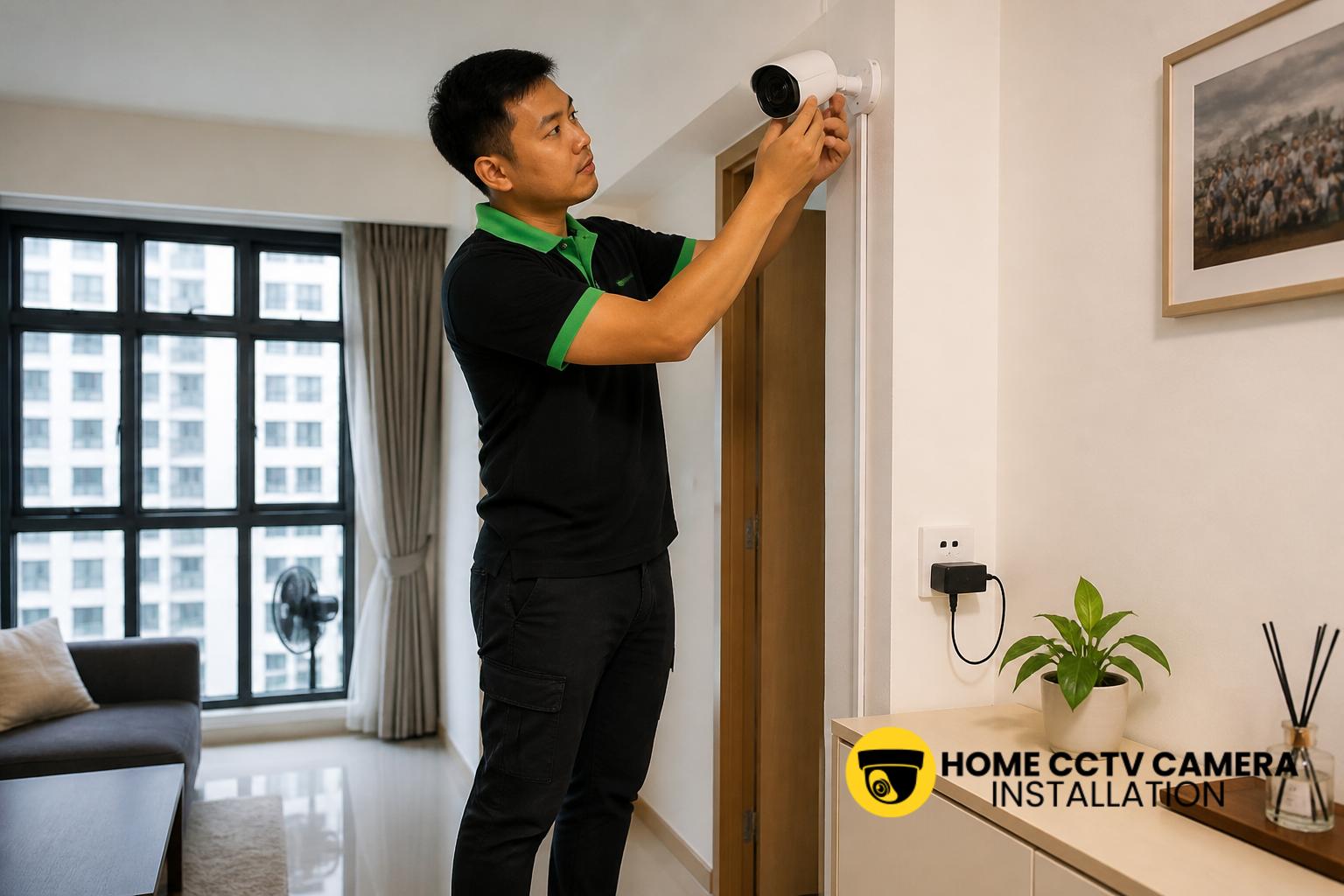
Home CCTV installation in a Singapore HDB flat is usually a practical, planned process rather than a simple matter of fixing a camera to the wall. The installer needs to consider the flat layout, the intended coverage, the available power points, the route for cabling, and how to mount the cameras neatly without causing unnecessary disruption. In HDB homes, the goal is typically to create clear, usable coverage for key areas such as the main entrance, living room, service yard or corridor-facing points, while keeping the installation tidy and suitable for the flat’s structure.
Starting with the flat layout and coverage plan
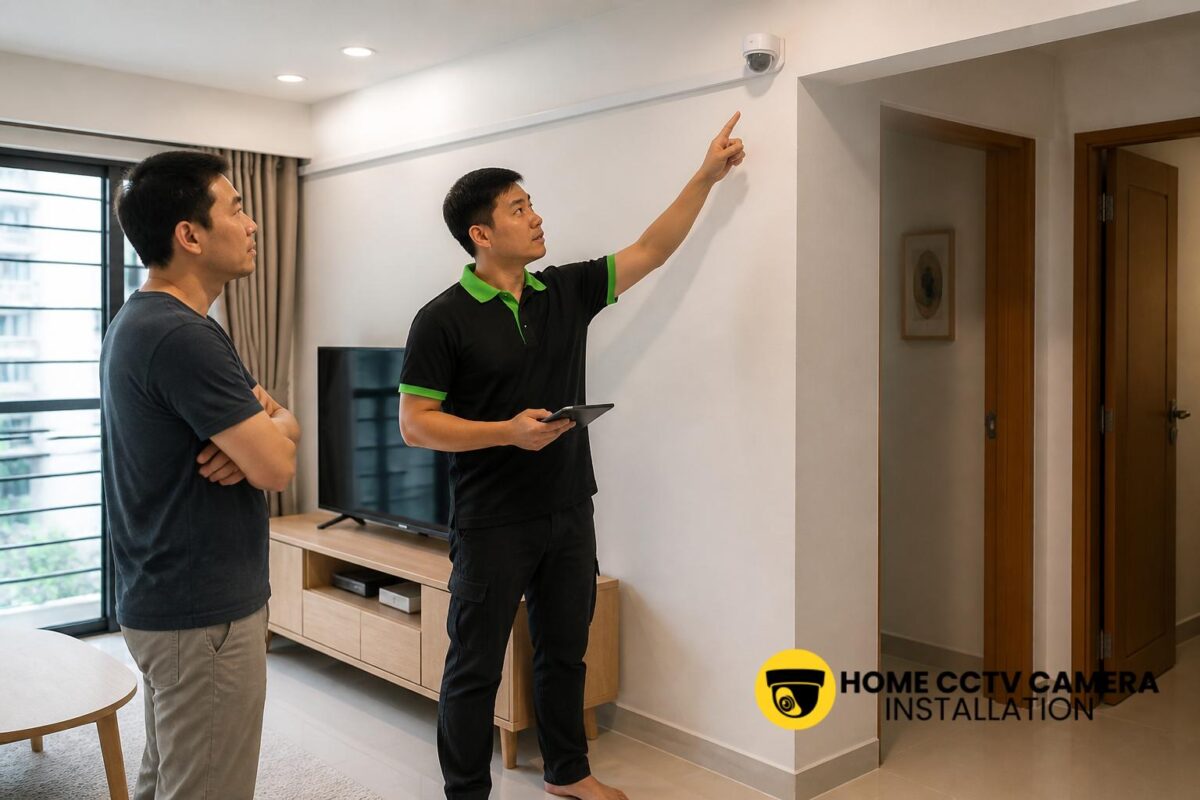
The process normally begins with understanding the layout of the HDB flat and how the household wants to use the CCTV system. A compact three-room flat, for example, may need only one or two carefully positioned cameras, while a larger executive apartment may require broader coverage. The installer will usually look at entry points, blind spots, and the most practical locations for mounting the cameras.
In HDB flats, the focus is often on the main door, windows facing common areas, and internal spaces where visibility is important. The exact placement should balance coverage and discretion, so the cameras can capture useful footage without becoming intrusive or visually messy.
Checking whether the job is supply-and-install or installation-only
Not every household needs the same scope of work. Some owners prefer a full supply-and-install service, where the cameras, mounts, and supporting materials are provided together with the installation. Others already have customer-supplied cameras and only need installation-only support to mount and set them up properly.
This distinction matters because the installer may need to confirm compatibility, camera type, power requirements, and whether any accessories are needed for mounting or cable management. For HDB flats, it is also useful to clarify in advance whether the home uses wired CCTV cameras, IP security cameras, or another setup, so the installation can be planned accordingly.
Preparing the mounting points in an HDB home
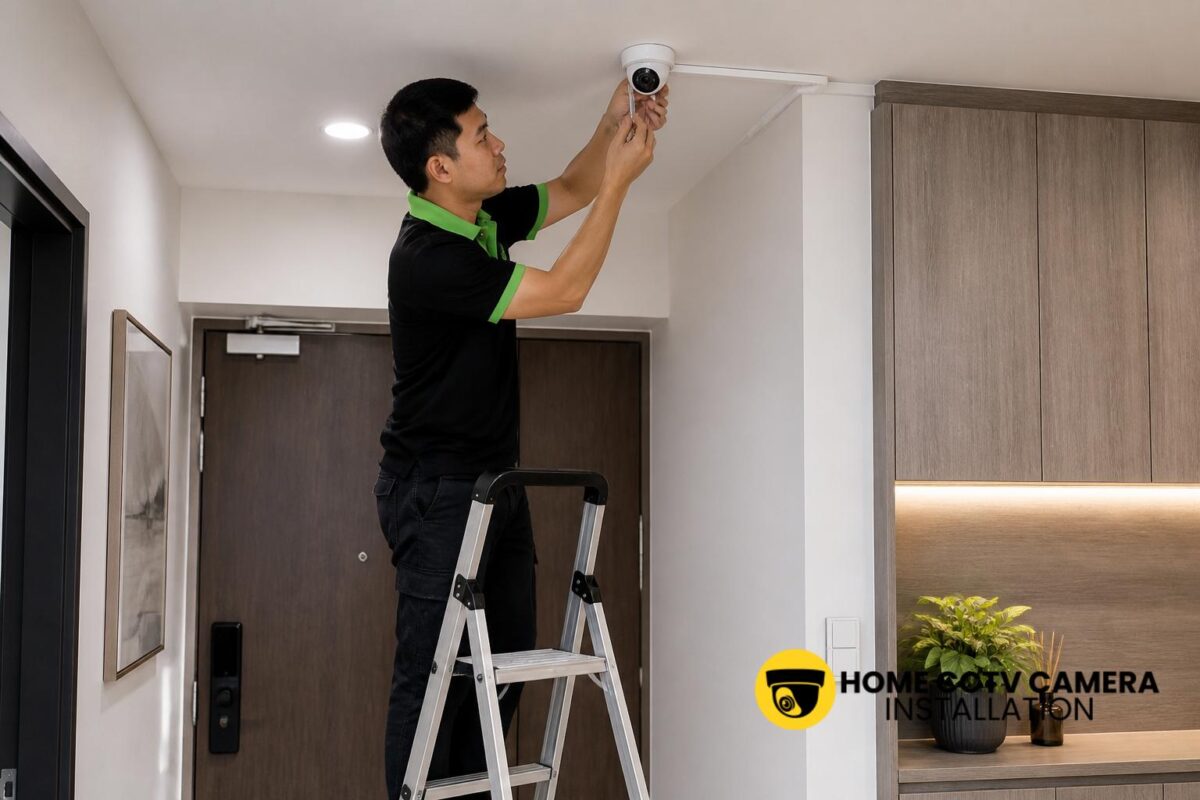
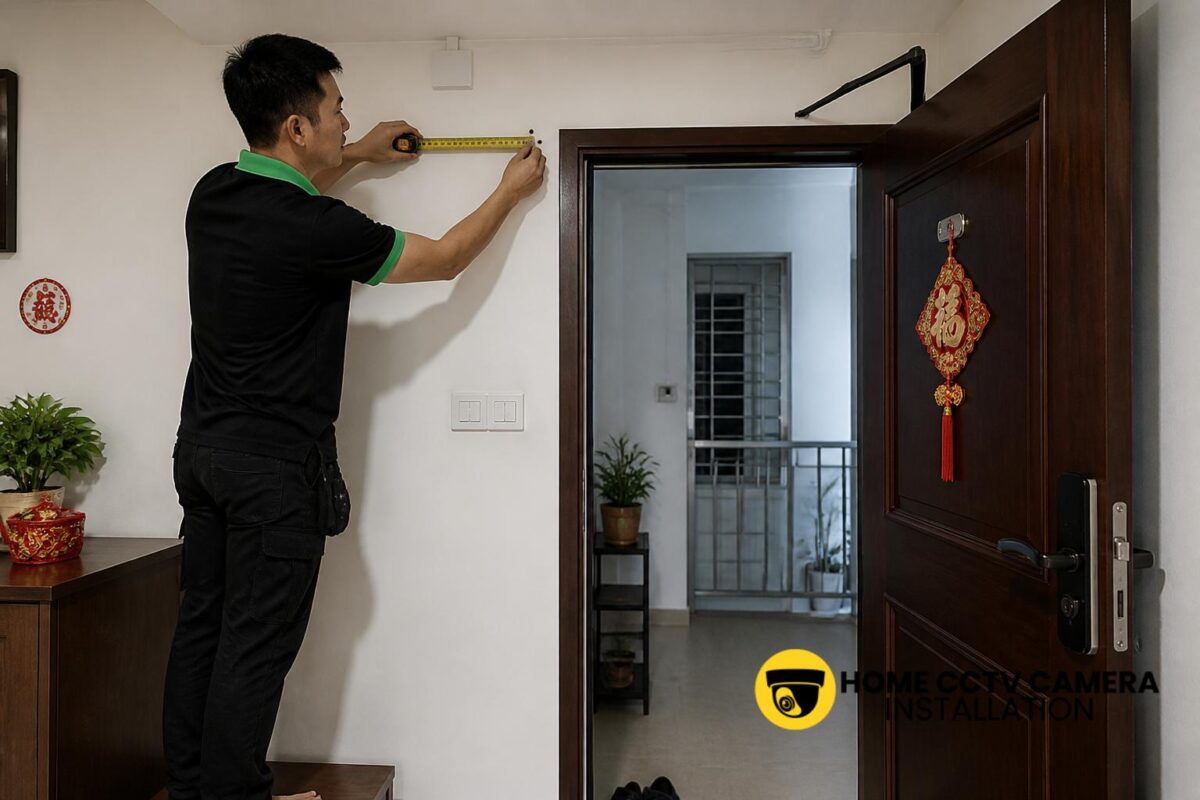
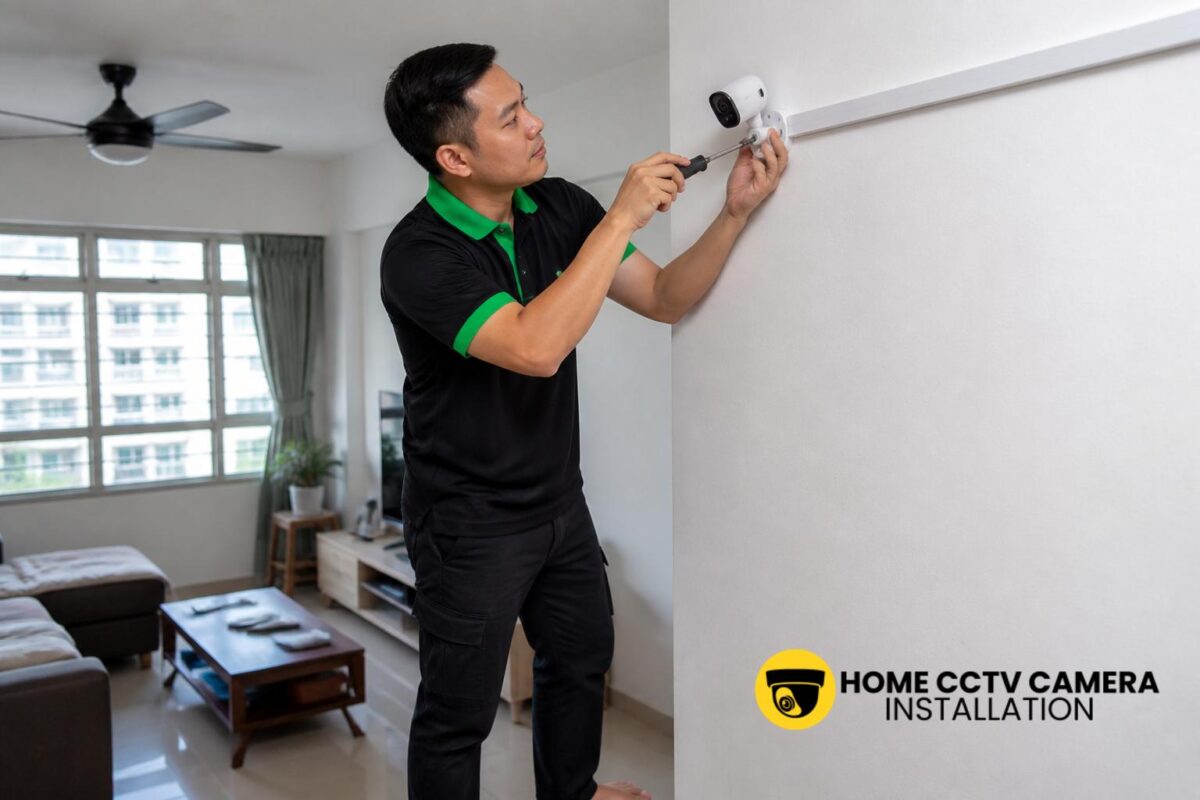
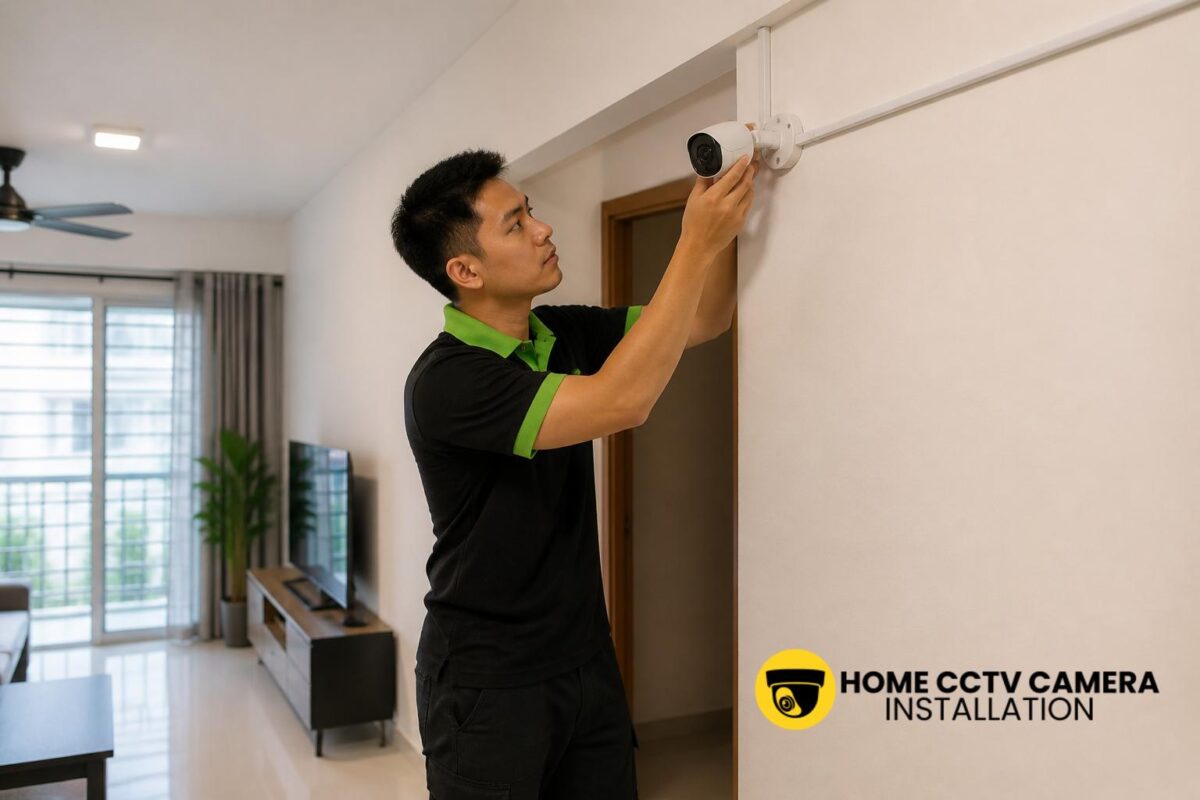
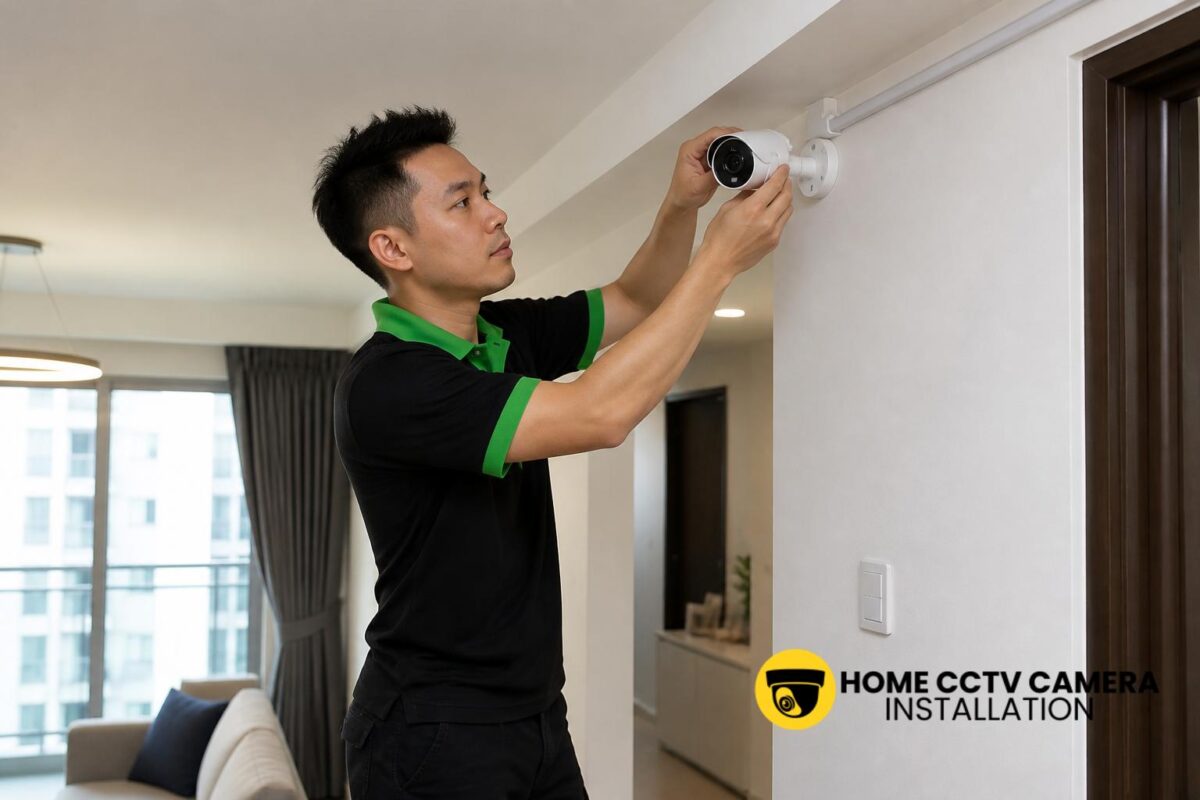
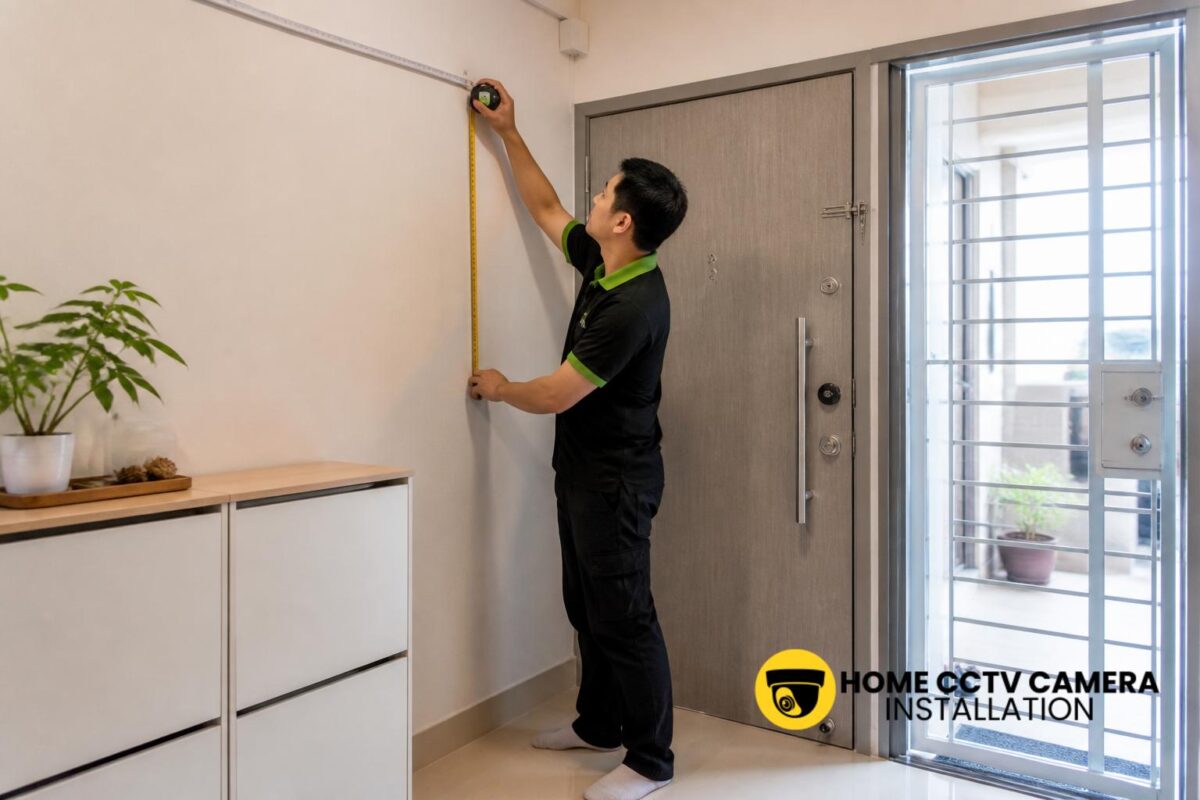
Once the camera positions are agreed, the installer will prepare the mounting points on the wall or ceiling. This usually involves marking the location, checking the surface, and ensuring the chosen spot is suitable for secure fixing. In an HDB flat, this step is important because the installer must work around existing finishes, furniture placement and the flat’s internal structure.
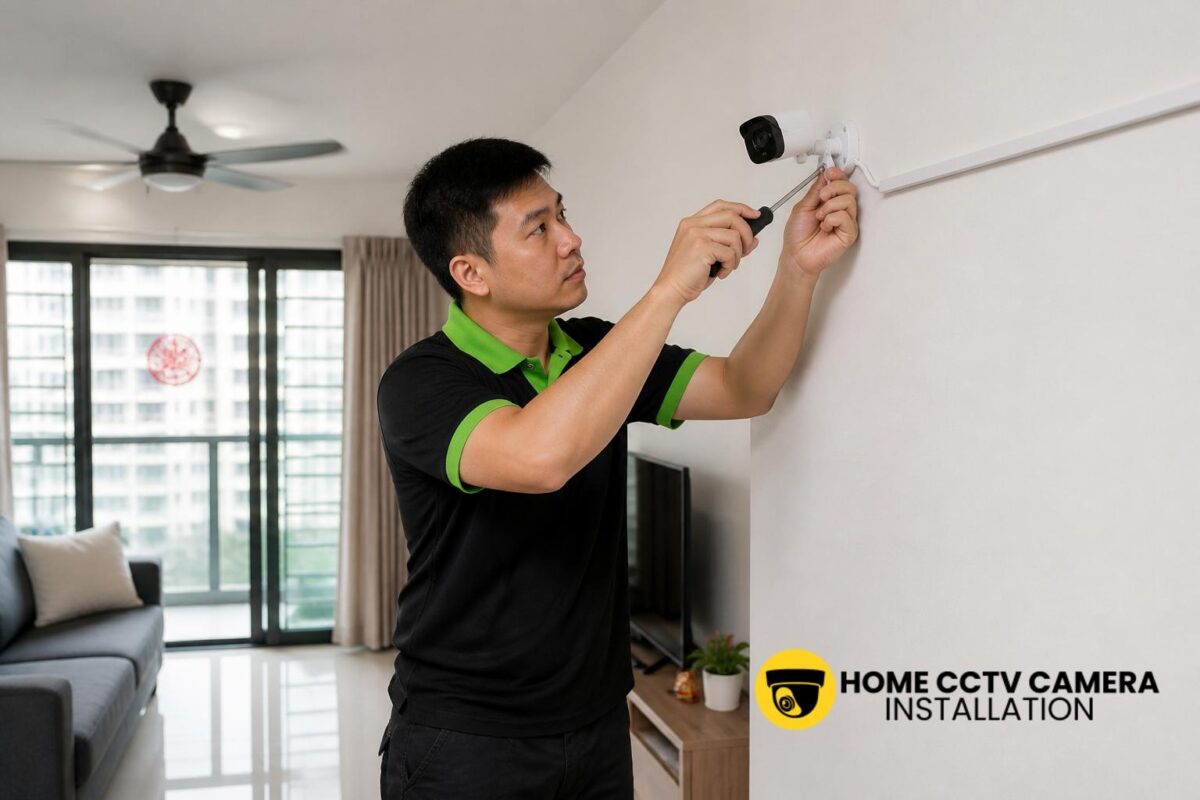
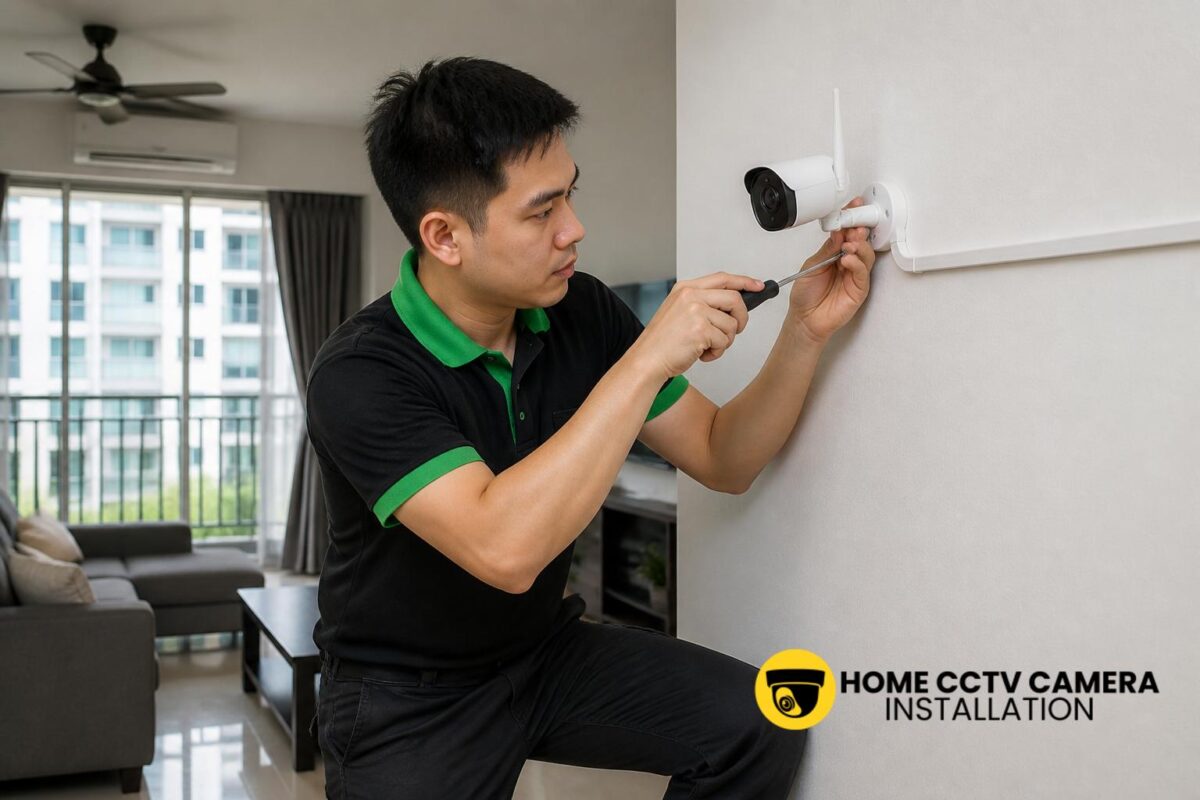
Depending on the camera model and surface type, secure wall or ceiling mounting may require the right screws, anchors, and brackets. A neat installation should keep the camera stable and correctly angled, so it does not shift after installation or appear misaligned over time.
Running cables neatly and safely
For wired CCTV installations, cabling is one of the most important parts of the job. In HDB flats, cable routes are typically planned to reduce visual clutter and to keep the installation as neat as possible. The installer may route cables along edges, behind furniture, or through sensible pathways that suit the flat’s interior layout.
Good cable management is not only about appearance. It also helps protect the cables from accidental damage and reduces the chance of loose wiring becoming inconvenient in daily use. Where a power point is not nearby, the installer may discuss suitable options for power-point support, depending on the camera setup and the layout of the home.
Power supply, recording equipment and setup points
CCTV cameras need stable power, and in many HDB flats this means identifying the nearest practical source before installation begins. Some systems rely on direct power from a nearby socket, while others may involve more structured wiring depending on the number of cameras and where the recording device will be placed.
The installer will also consider where the recorder or monitoring device should sit, especially if the system uses wired connections. A sensible setup keeps the equipment accessible for maintenance while still maintaining a tidy appearance. In a home setting, this often means placing equipment in a discreet indoor location rather than exposing it unnecessarily.
Positioning the cameras for useful footage
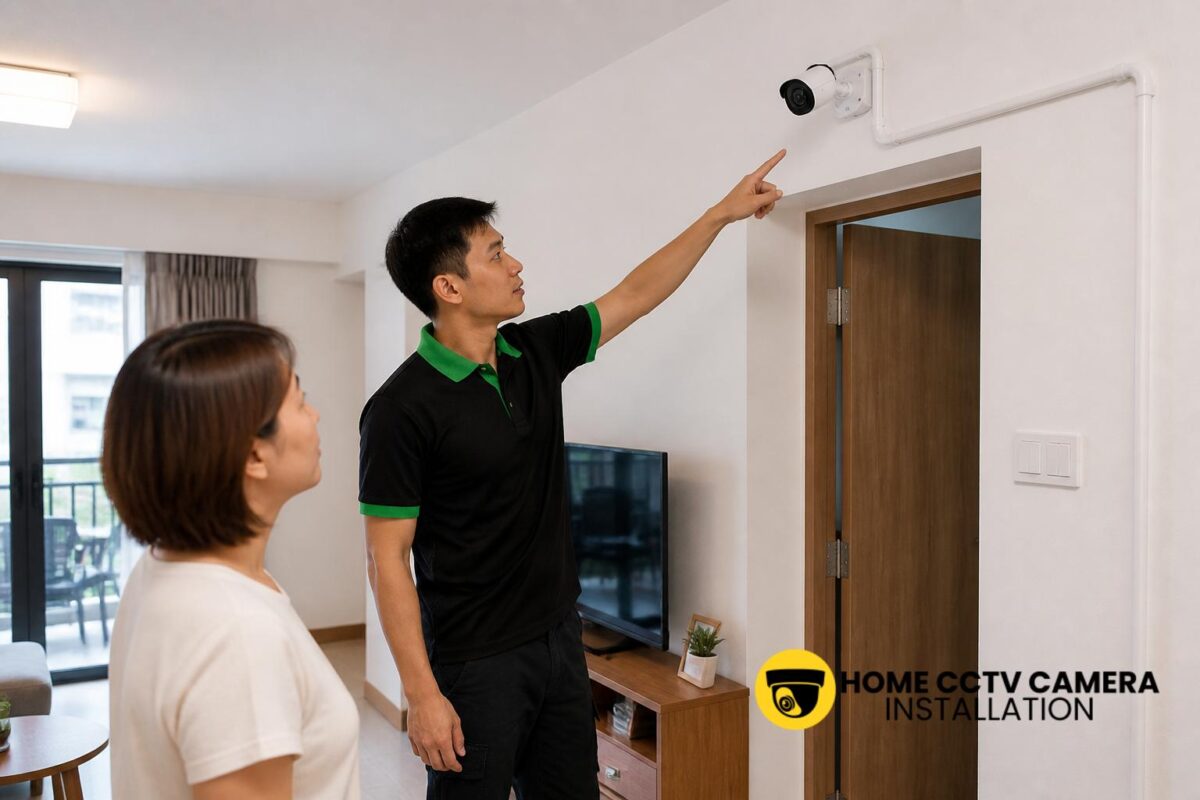
Camera angle is just as important as the camera location. A camera mounted too high may miss useful detail, while one mounted too low may have limited field of view or be easier to obstruct. In HDB flats, installers often adjust the tilt and direction carefully so the camera captures the intended area clearly.
Typical points of interest may include the main entrance, living room access, balcony-facing points, or service areas. The actual choice depends on the household’s priorities and the flat’s structure. The aim is to avoid blind spots while keeping the system practical for everyday residential use.
Final testing and basic user setup
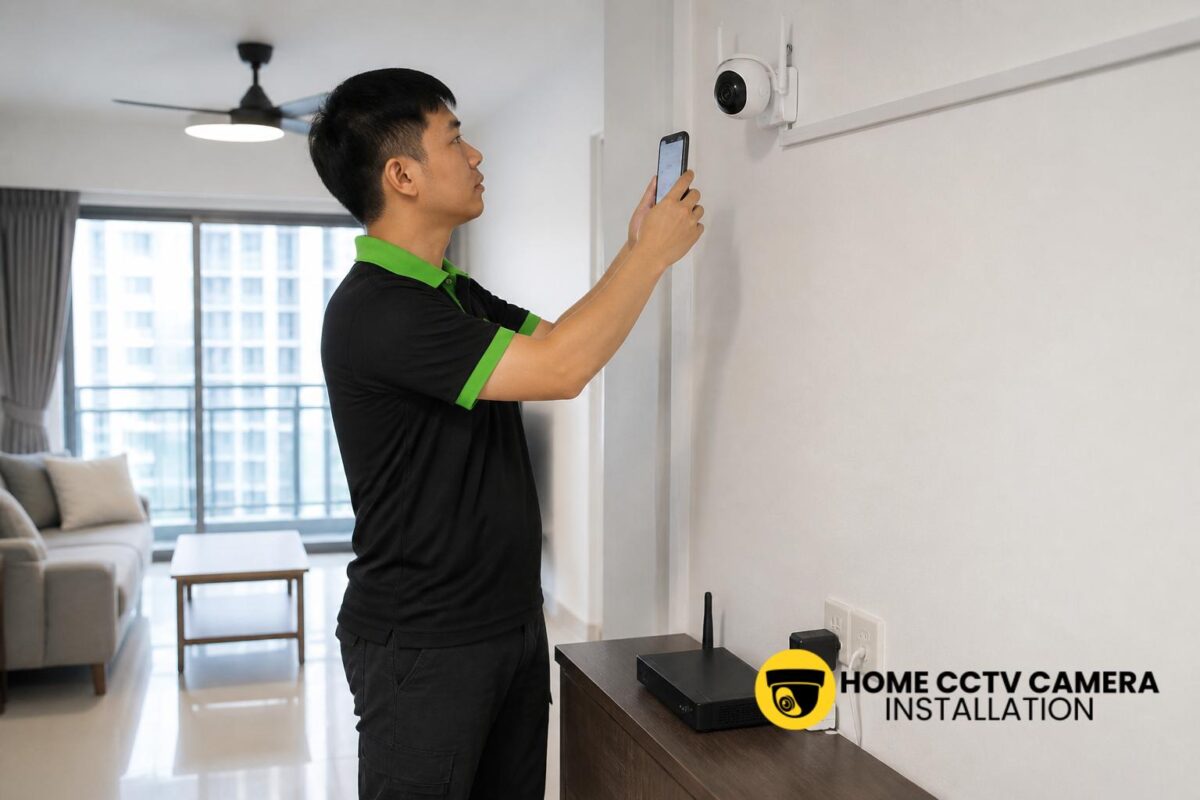
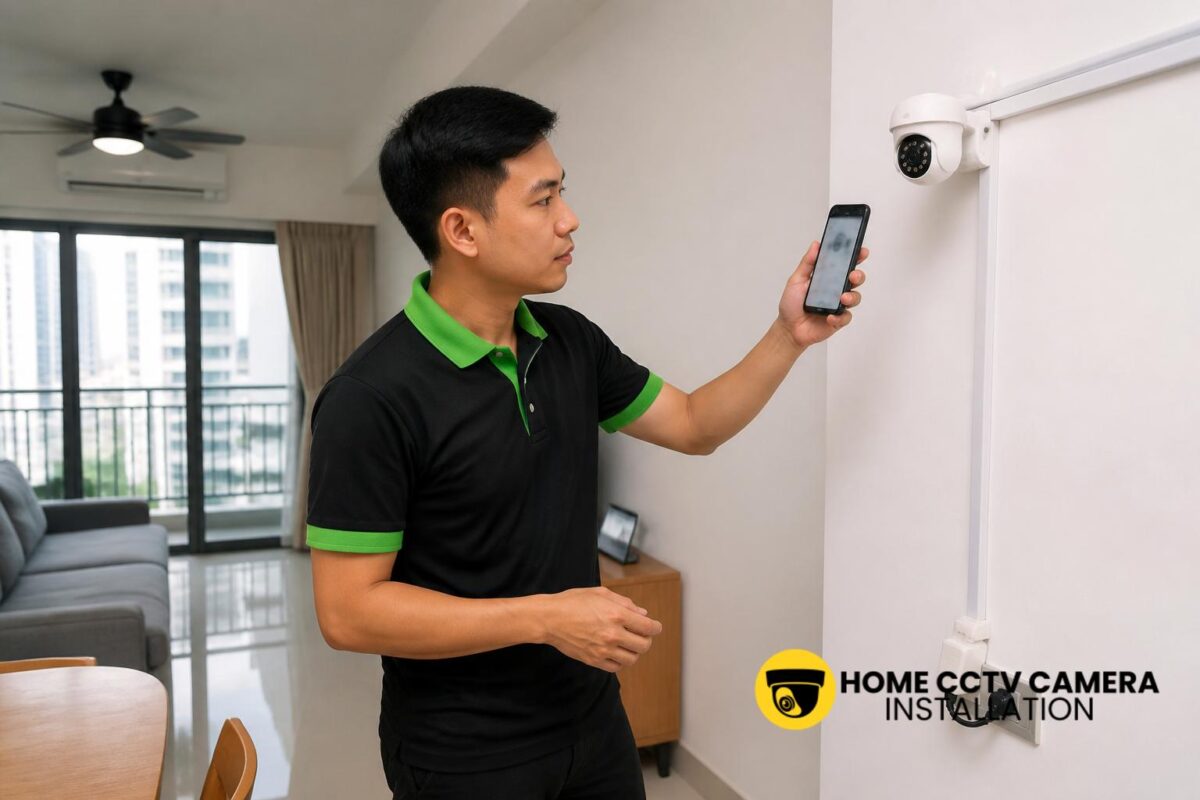
After the cameras are mounted and connected, the installer will usually carry out testing to check that the system powers on correctly and that the camera views are aligned as intended. This may include confirming picture quality, checking whether the lens angle needs adjustment, and ensuring the recording or viewing function is operating as expected.
For IP security cameras and similar systems, the setup may also include basic configuration so the homeowner can access the cameras properly. At this stage, it is helpful to verify that the system is understandable to the household, especially if they plan to view footage through a mobile app or local recorder. The final walk-through should leave the owner clear on the main functions and any routine checks needed.
What HDB homeowners should prepare before installation day
Preparation can make the installation smoother and faster. Homeowners may want to identify the areas they would like covered, clear access to the mounting points, and decide whether the system is a new supply-and-install project or an installation-only job for existing equipment. It is also useful to mention any furniture restrictions, renovation finishes, or preferred cable routes before work begins.
If you already have cameras, it helps to confirm the model and accessories in advance. If you need a new installation, be ready to share the number of cameras, the intended locations, whether cabling is required, and whether any power-point support may be necessary. This helps the installer plan a practical solution for the flat.
If you would like to discuss your HDB flat’s CCTV requirements, you can WhatsApp Home CCTV Camera Installation Singapore to request a quotation and share details such as your property type, number of cameras, supply-and-install or installation-only scope, preferred camera locations, existing equipment, and any cabling or power-point requirements: message us on WhatsApp.
Conclusion
Home CCTV installation in Singapore HDB flats is usually carried out through a clear sequence: site planning, mounting preparation, cable routing, power connection, camera alignment and final testing. When the process is handled carefully, the result is a neat residential setup that suits the flat’s layout and the homeowner’s coverage needs. The most important part is matching the installation method to the home, whether that means a full supply-and-install service or support for customer-supplied cameras.
Choose Home CCTV Camera Installation Singapore
Home CCTV Camera Installation Singapore helps homeowners enhance security through professionally installed home CCTV systems across Singapore. Whether you require full supply and installation or home CCTV installation support for your home, our team ensures a clean and reliable setup.
We install a wide range of CCTV cameras, including IIP cameras, IP security cameras, surveillance cameras, and other configurations designed for residential use. Our CCTV installation services cover proper camera mounting, neat cabling, and power point installation where necessary, ensuring your home CCTV operates smoothly with clear and consistent coverage.
Home CCTV Camera Installation Singapore provides reliable Home CCTV installation services for HDB flats, condominiums, and landed homes. With a focus on quality installation and practical system planning, we help homeowners secure their living spaces with confidence. WhatsApp +65 8241 0032 to arrange your home CCTV installation today.
Frequently Asked Questions
Can CCTV cameras be installed neatly in an HDB flat?
Yes. A good installation should keep the cameras secure and the cabling as tidy as possible. The installer will usually plan the cable route and mounting points based on the flat’s layout and the homeowner’s preferred coverage areas.
Do I need to choose the camera locations before the installer arrives?
It helps to have an idea of the areas you want covered, such as the main door or living room. The installer can then assess whether those locations are practical and suggest adjustments if needed for better coverage or neater cabling.
What is the difference between supply-and-install and installation-only?
Supply-and-install means the cameras and related materials are provided as part of the job. Installation-only means the installer works with cameras supplied by the homeowner and focuses on mounting, cabling, setup and testing.